Name the pattern first
Shedding, gradual thinning, patchy loss, scalp symptoms, breakage, and traction do not mean the same thing. The first job is to describe what is happening before buying anything.
Hair and identity
The first question is not which serum to buy. It is what pattern is happening, how fast it changed, what the scalp looks like, and whether a medical cause needs attention.
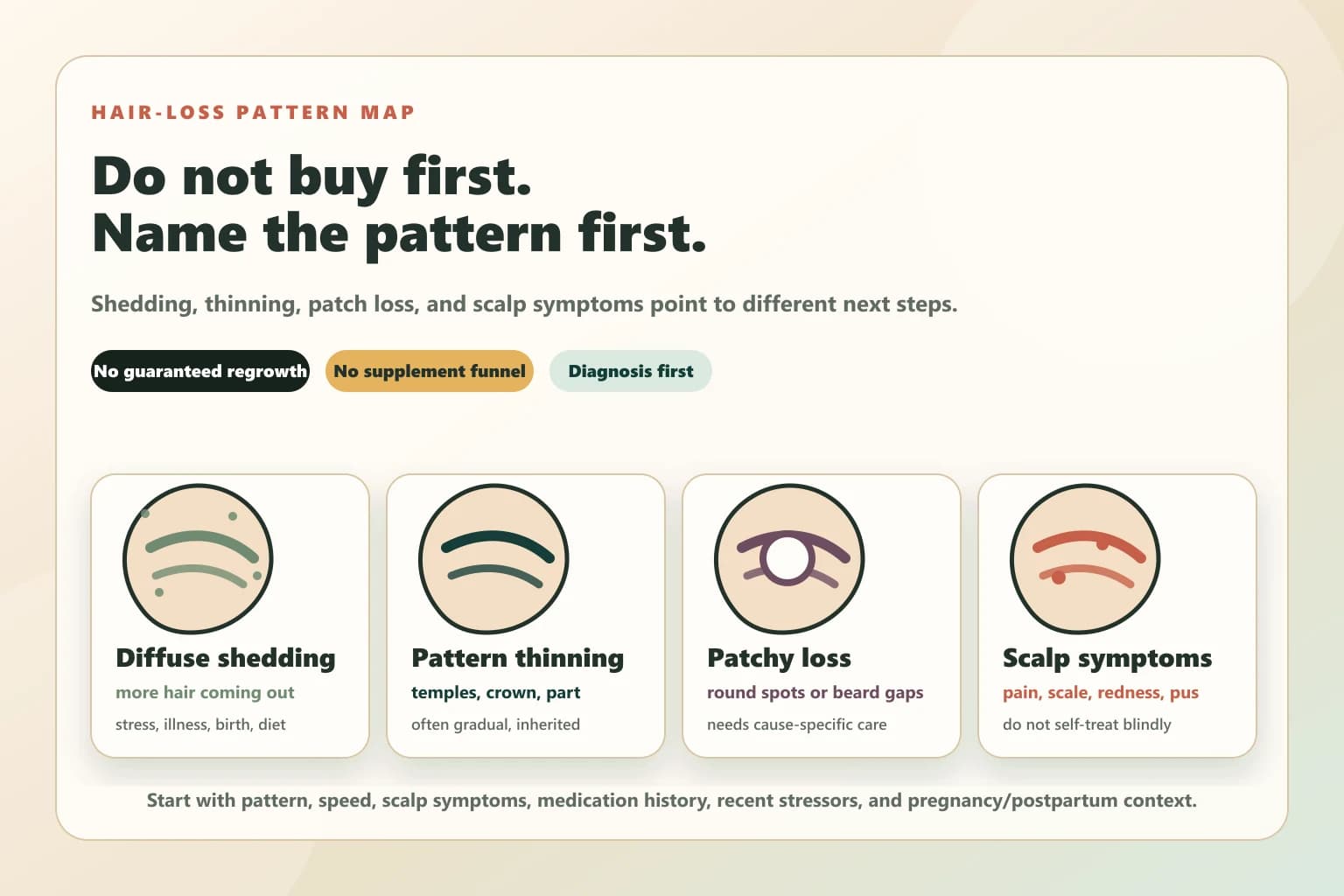
Shedding, gradual thinning, patchy loss, scalp symptoms, breakage, and traction do not mean the same thing. The first job is to describe what is happening before buying anything.
Hair loss can hit identity, culture, relationships, and confidence. Healthopathy should make room for that emotion without turning fear into a product funnel.
No oil, gummy, serum, laser cap, clinic, medication, or procedure belongs here unless the claim, evidence, limits, side effects, and exit plan are clear.
Care-first signs
A serious hair-loss hub protects people from delay. Sudden change, patching, pain, inflammation, pregnancy context, children, and medication complexity change the next step.
This article is educational and does not replace medical advice, diagnosis, or treatment. Speak with a qualified clinician for personal medical decisions or urgent symptoms. Read the full medical disclaimer.
Round patches, beard gaps, eyebrow or eyelash loss, or fast change deserves cause-specific evaluation rather than a supplement stack.
Tenderness, redness, intense itch, scale, sores, pus, or scarring risk should be routed to qualified care. Do not self-treat blindly.
Fatigue, fever, weight change, menstrual change, acne, new medications, autoimmune symptoms, or major illness can change the cause and the workup.
Adult hair-loss product advice is the wrong starting point. Pregnancy exposure, postpartum shedding, and pediatric hair loss need more cautious care routing.
Hair loss can be emotionally heavy. If anxiety, depression, shame, or hair-pulling behavior is taking over, support matters as much as the scalp plan.
Pattern before product
A hair-loss page becomes dangerous when it treats all hair loss as one problem. Pattern loss, shedding, patch loss, traction, breakage, and scalp disease need different questions.
| Pattern | What it can look like | First question | Useful route |
|---|---|---|---|
| Everyday shedding | Some hair in the shower, brush, or pillow. Roughly 50 to 100 shed hairs per day can be normal. | Is this actually more than usual, or newly alarming? | Track for a short period without obsessive counting. Look for change in density, part width, ponytail thickness, or visible scalp. |
| Excess shedding | Hair coming out in larger amounts after childbirth, major stress, illness, surgery, significant weight loss, or medication change. | What happened two to four months before shedding started? | Review triggers, nutrition, medicines, and symptoms. Many shedding episodes improve, but the cause still matters. |
| Pattern thinning | Temple recession, crown thinning, a widening part, smaller ponytail, or slow miniaturization over months to years. | Is the pattern gradual and family-linked? | Discuss diagnosis early. Some treatments work better before follicles shrink too far, but no treatment works for everyone. |
| Patchy loss | Round or oval patches on the scalp or beard, eyebrow loss, eyelash loss, or sudden smooth bald areas. | Is this alopecia areata, fungal infection, scarring disease, or something else? | A dermatologist can identify the pattern and choose the right treatment lane. Do not assume oil or vitamins will fix it. |
| Traction or breakage | Thinning at edges or areas under repeated tension, breakage from heat, chemicals, tight styles, extensions, or harsh grooming. | Does the hairstyle hurt, pull, or repeatedly stress the same area? | Change tension and hair-care practices early. Persistent traction can become harder to reverse if follicles scar. |
| Scalp disease or scarring risk | Pain, scale, redness, pustules, tenderness, shiny scarred areas, broken hairs, or worsening localized loss. | Is the scalp itself inflamed, infected, painful, or changing texture? | Seek care. Scarring forms of hair loss can permanently damage follicles, so delay is expensive. |
Treatment reality
The page should not make people hopeless, but it should also not imply that a single product solves every cause. The reader needs enough context to ask better questions.
Useful when: The pattern is unclear, sudden, patchy, painful, inflamed, linked to illness or medicines, or emotionally destabilizing.
A treatment list without a diagnosis is not a plan. Hair loss can have more than one cause at the same time.
Useful when: Often discussed for early pattern hair loss and some regrowth-maintenance plans.
Labeling warns against use when hair loss is sudden, patchy, postpartum-related, unexplained, under age 18, or the scalp is irritated or painful. It takes months and does not work for everyone.
Useful when: Oral finasteride is an FDA-approved prescription option for male pattern hair loss.
Pregnancy exposure warnings matter. The FDA has also warned that compounded topical finasteride is not FDA-approved and has reported adverse events.
Useful when: Dandruff-like inflammation, psoriasis, infection, alopecia areata, or scarring alopecia may need targeted medical treatment.
The wrong cosmetic product can delay care while inflammation damages follicles.
Useful when: PRP, laser devices, microneedling, or transplantation may be relevant for selected people after diagnosis.
Results vary, cost can be high, and clinics may oversell before explaining candidacy, maintenance, or failure risk.
Useful when: Traction, breakage, styling damage, and emotional distress need practical support, not just medication talk.
Wigs, toppers, styling changes, and shaving can be valid choices. They are not admissions of failure.
Product claim audit
Healthopathy can eventually earn from this category, but not by ranking miracle products. Each claim needs a verdict, a safety boundary, and a reason.
Do not treat as default
Supplements may help only in specific deficiency or clinical contexts. A shiny before-and-after does not prove your cause is nutritional.
Traditional or emerging, not magic
Cultural practices can be respected, but they still need safety, irritation, allergy, pregnancy, scalp-disease, and evidence boundaries.
High skepticism
If a product implies hormone-level effect, it needs a stronger safety discussion than vague natural marketing usually gives.
Needs device-specific evidence
Ask what population was studied, what result is realistic, how long treatment takes, and whether the device is cleared for the specific use being sold.
Medical review first
The FDA says there is no FDA-approved topical finasteride product and has warned about adverse-event reports and transfer risk.
Candidacy before price
A transplant cannot fix every cause. Diagnosis, donor area, age, progression, maintenance medicines, scarring risk, and expectations come first.
Appointment prep
The best free tool for this page is not a product quiz. It is a clean prep list that helps a reader arrive with the details a clinician actually needs.
Take clear photos in the same lighting: hairline, temples, crown, part line, sides, and any patches.
Write the timeline: when it started, whether it was sudden or gradual, and what changed two to four months before.
List medicines, supplements, illnesses, surgeries, pregnancy/postpartum context, weight change, stress, and diet restriction.
Describe scalp symptoms: itch, pain, burning, scale, redness, bumps, pus, tenderness, or shiny/scarred areas.
Bring hair practices honestly: tight styles, extensions, heat, bleaching, relaxers, oils, helmets, coverings, and washing pattern.
List products tried, dose or frequency, side effects, cost, and whether stopping caused shedding or anxiety.
Protected support guide
This guide is live for site structure and reader testing, but it remains noindexed until dermatology review and a stronger hair-loss support cluster are complete.
A protected Healthopathy guide to hair shedding, pattern thinning, patchy loss, scalp symptoms, medical causes, product red flags, and what to prepare before care.
A protected guide to widening-part hair loss, female pattern thinning, PCOS, iron, thyroid disease, menopause, scarring signs, testing, and when to seek care.
A protected evidence and safety guide to male pattern hair loss, minoxidil, finasteride, sexual and mood effects, fertility, topical compounds, oral minoxidil, and procedures.
Understand when postpartum shedding is expected, how recovery usually unfolds, and when bleeding, thyroid symptoms, scalp changes, or medication questions need care.
Visual system
Hair-loss imagery can become humiliating quickly. These visuals avoid exposed scalp photography, miracle before-and-after framing, and product glamour shots.
hair-loss-pattern-map.webp
Use this to stop the first bad decision: buying a product before naming the pattern.
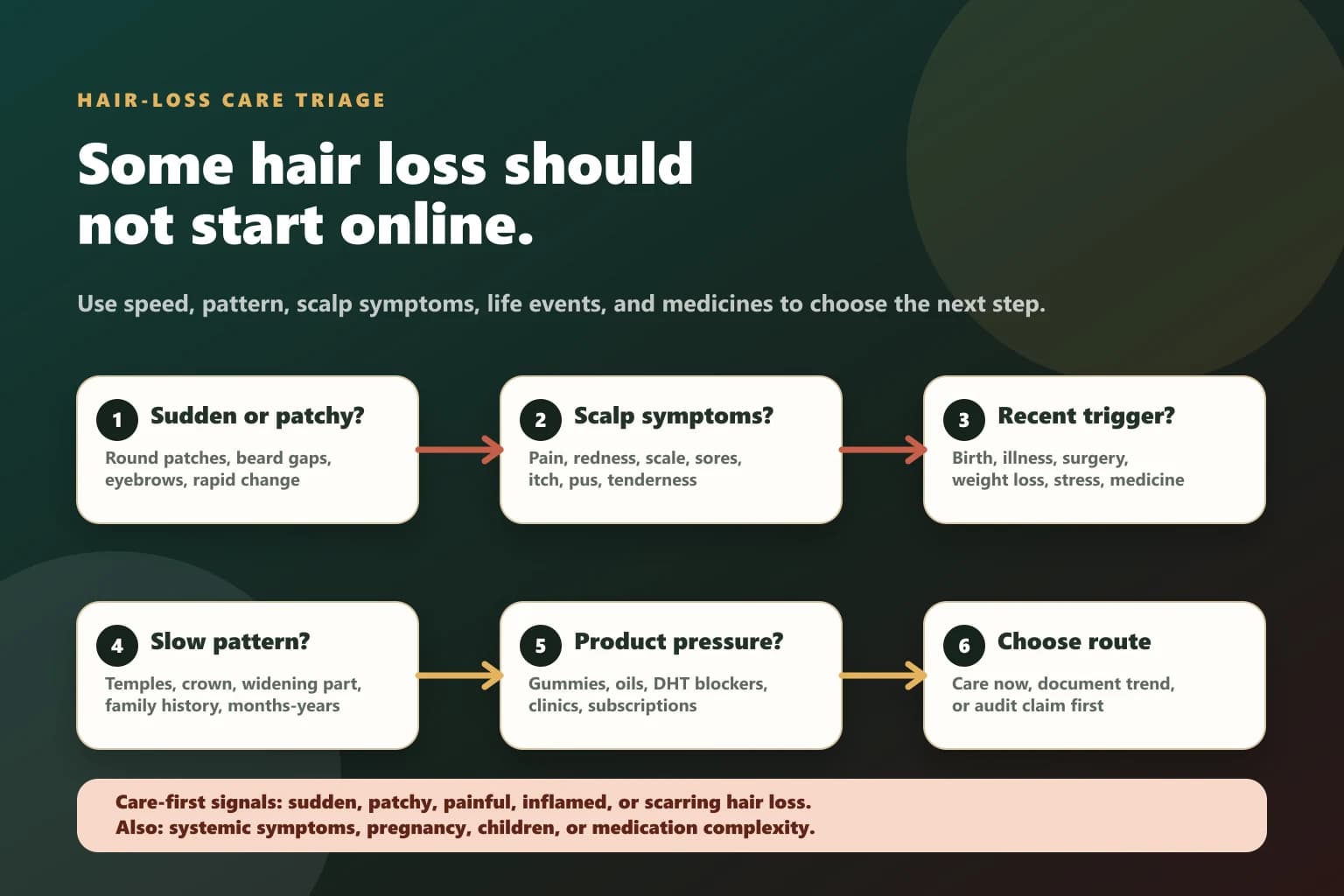
hair-loss-care-triage.webp
The page should help readers decide when to seek care instead of browsing product ads.
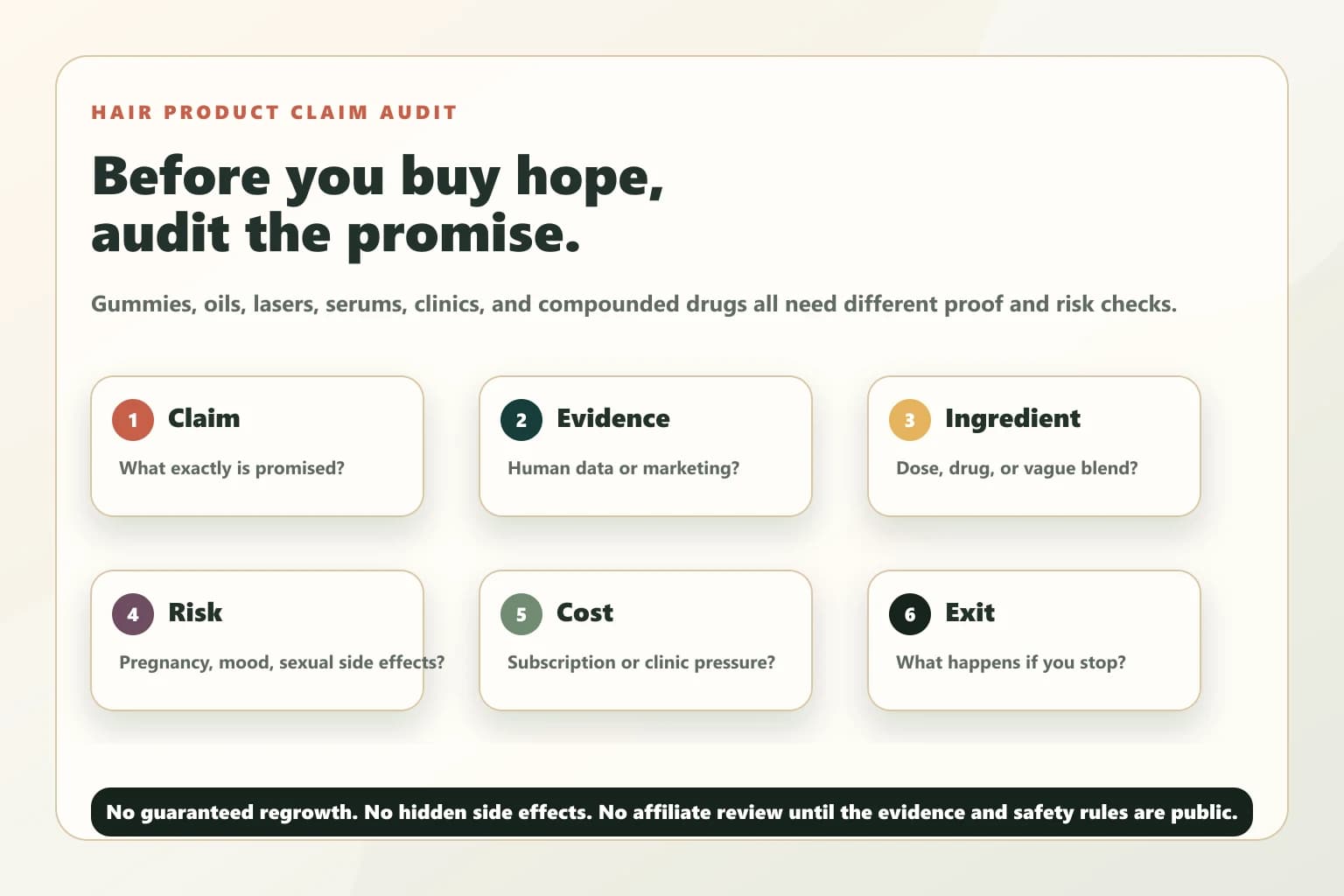
hair-loss-product-claim-audit.webp
Every future affiliate review in this category must pass this style of claim audit first.
Source backbone
This protected hub uses MedlinePlus, AAD, DailyMed, and FDA sources as the first floor. Future articles need stronger source notes, reviewer input, and claim-specific tables before this category earns search indexing.
Related lane
Use this when hair loss overlaps with testosterone claims, fertility concerns, sexual side effects, or male-pattern treatment questions.
Related lane
Use this when shedding overlaps with periods, postpartum change, menopause, PCOS, anemia concerns, or hormone questions.
Related lane
Use this when shedding followed major weight change, severe restriction, protein gaps, or body-image pressure.
Related lane
Use this when symptoms are sudden, painful, inflamed, or medically complicated.
Protected status
The hub is now useful, but hair loss is product-heavy and medically varied. It should stay noindexed until we have a reviewer workflow, support articles, and final claim rules for product reviews.
Completed through Phase 11: dedicated hub, safety triage, pattern map, treatment boundary table, product claim audit, source backbone, visual assets, and four protected support guides.
Still missing: dermatologist review, traction alopecia and minoxidil support articles, plus affiliate and product-review criteria.
Phase 11 decision: keep /hair-loss and all four support guides noindexed until the clinical review and cluster are stronger.