No shame
Weight can affect health, but shame is not a treatment. This page focuses on blood pressure, blood sugar, lipids, sleep, strength, mobility, pain, fertility, mood, and quality of life.
Metabolic health
A useful weight-loss page protects health, dignity, strength, and metabolic risk at the same time. No shame. No detox theater. No pretending a product can replace care.
Health first
Scale plus story
Weight, waist, labs, strength, sleep, symptoms, medication, mood, and real life.
Weight can affect health, but shame is not a treatment. This page focuses on blood pressure, blood sugar, lipids, sleep, strength, mobility, pain, fertility, mood, and quality of life.
Extreme restriction, detoxes, laxatives, fat burners, dehydration, and punishment workouts are not Healthopathy weight-loss content.
Kitchen tools, trackers, programs, medications, and paid guides only belong after safety, evidence, and reader fit are clear.
Safety triage
This section comes first because the most dangerous weight-loss content makes vulnerable readers feel late, weak, or desperate.
Do not treat sudden weight loss as success. Seek qualified care, especially with fever, night sweats, pain, bowel changes, weakness, excessive thirst, or appetite change.
Purging, laxative use, compulsive exercise, fainting, severe restriction, binge-purge cycles, fear of eating, or obsession with weight needs care before another plan.
This adult page is the wrong tool. Weight advice in these situations needs clinician-guided, developmentally appropriate care.
Weight changes can affect medication dosing, hydration, blood pressure, glucose, mood, and nutrition. Use medical support rather than self-adjusting.
Pause. That claim is usually a marketing warning, not a health plan. Check the claim, seller, ingredients, evidence, and refund/subscription terms.
What actually matters
The goal is not a clever diet name. The goal is a system that helps the reader eat enough nutrients, protect muscle, move safely, sleep better, avoid scams, and use clinical care when it belongs.
| Lever | What it means | Useful start | Watch out for |
|---|---|---|---|
| Sustainable calorie gap | Fat loss requires energy balance, but the practical question is how to create a gap without starvation, chaos, or rebound. | Reduce liquid calories, oversized snacks, and ultra-processed grazing before cutting whole food groups. | Very low intake, skipped meals followed by binges, or plans that make normal social eating impossible. |
| Protein and fiber | Protein and fiber can improve fullness, support muscle, and make meals more stable across cultures and budgets. | Build meals around a protein source, beans or lentils, vegetables or fruit, and a high-fiber starch when it fits. | Protein hype that ignores kidneys, cost, constipation, culture, or the rest of the diet. |
| Strength training | Losing weight without protecting muscle can make the scale look better while strength, function, and healthspan get worse. | Train major movement patterns two or more days per week, scaled to ability and pain. | Punishment workouts, injury escalation, or assuming cardio alone protects muscle. |
| Walking and cardio | Movement supports cardiometabolic health even when the scale moves slowly. | Start with repeatable walking, cycling, swimming, stairs, or zone-2 style sessions that you can recover from. | Using exercise to erase meals or pushing through chest pain, dizziness, severe breathlessness, or injury. |
| Sleep, stress, alcohol, and environment | Weight is affected by appetite, energy, decision fatigue, recovery, shift work, alcohol, food access, and family routines. | Fix the easiest repeated friction: sleep timing, late-night snacking, alcohol frequency, commute food, or home snack visibility. | Advice that blames willpower while ignoring the life system around the person. |
| Medical treatment when appropriate | Some adults benefit from clinician-guided medications or bariatric surgery alongside behavior change. | Discuss health history, medication list, pregnancy plans, side effects, cost, monitoring, and long-term maintenance. | Online shortcuts, copycat drugs, casual stacking, pregnancy risk, or stopping medicine without a plan. |
Better scoreboard
A serious page should help readers ask better questions. If weight changes while blood pressure, sleep, strength, pain, or eating behavior worsens, the plan needs revision.
This article is educational and does not replace medical advice, diagnosis, or treatment. Speak with a qualified clinician for personal medical decisions or urgent symptoms. Read the full medical disclaimer.
Often improves with weight loss, movement, lower alcohol intake, sleep apnea care, and medication when needed.
Measure properly at home or in clinic before guessing.
Prediabetes and diabetes risk can change with food pattern, activity, sleep, medications, and weight.
Ask whether glucose, A1C, or medication review belongs in your plan.
LDL, triglycerides, and HDL tell a different story than weight alone.
Pair nutrition changes with heart-health context, not just scale goals.
Waist change, grip, lifting ability, stairs, walking pace, and pain can show health movement before the scale does.
Track function and waist gently, without daily body checking.
Snoring, witnessed pauses, morning headaches, and daytime sleepiness can drive fatigue, hunger, blood pressure, and weight regain.
Route sleep-apnea signs to care rather than only changing diet.
Program filter
The most trustworthy program is rarely the loudest one. It should explain what happens after motivation drops, how support works, what the risks are, and what the typical result looks like.
Realistic goals, behavior support, food flexibility, physical-activity guidance, sleep context, maintenance planning, transparent cost, and trained support.
Regular sessions, personal goal tracking, feedback from qualified staff, privacy clarity, and a plan for plateaus, travel, culture, and relapse.
Medical history, medication review, side effects, pregnancy warnings, lab or vital monitoring when appropriate, and a plan for stopping or continuing.
Lose weight without diet or exercise, eat unlimited food, lose 30 pounds in 30 days, spot-reduce fat, miracle metabolism, detox, fake clinical badges, or hidden subscriptions.
Product claim filter
Weight-loss products often sell urgency before evidence. A reader should be able to slow down, name the claim, and see what is missing.
Usually a stimulant, caffeine-heavy blend, or vague plant extract. Ask for human evidence, exact doses, adverse effects, and interaction warnings.
Often sells dehydration, laxatives, restriction, or digestive distress as progress. Weight changes may be water and gut content, not fat loss.
A food, herb, or supplement is not the same as a prescribed medication with dosing, monitoring, contraindications, and adverse-effect reporting.
Spot reduction claims are a classic red flag. Body-fat loss patterns are influenced by genetics, hormones, age, sex, and total fat loss.
Lighting, posing, dehydration, selection bias, undisclosed drugs, and atypical results can make weak products look dramatic.
Traditional use can be culturally interesting, but it does not replace safety data, dosing, contamination checks, or clinical evidence.
Seven-day reset
This is not a crash challenge. It is a first-week structure that helps the reader gather signal, reduce friction, and decide whether self-guided habit work is enough.
Day 1
Name the real outcome: blood pressure, glucose, fertility, sleep, pain, stamina, confidence, or mobility. Do not start with self-hate.
Day 2
Choose one repeatable meal with protein, fiber, color, water, and a carbohydrate amount that fits your activity and culture.
Day 3
Use a short, realistic walk after the meal where it is easiest. Consistency beats heroic starts.
Day 4
Do two simple strength movements scaled to your body: sit-to-stand, push, pull, carry, hinge, or step-up.
Day 5
Pick one: bedtime, late caffeine, alcohol, snack visibility, screen spiral, or untreated snoring signs.
Day 6
Make the default easier: prep one protein, keep fruit visible, change one drink, or remove one repeated friction point.
Day 7
If red flags, medical complexity, binge eating, or medication questions exist, bring the plan to qualified care instead of buying a product.
Visual system
The best visuals for weight loss are decision aids: dashboards, plates, claim filters, symptom routes, and practical trackers. Body-transformation imagery would weaken trust, so the visual brief is intentionally anti-glamour and pro-clarity.
A clean visual showing weight beside blood pressure, A1C, lipids, waist, strength, sleep, pain, and mood so readers stop treating the scale as the only scoreboard.
A culturally flexible plate graphic with examples from South Asian, Mediterranean, Middle Eastern, Latin, East Asian, and Western meals.
A buyer-safety flow: claim, evidence, ingredients, contraindications, seller transparency, subscription terms, and stop-shopping signals.
Visual asset rules
Weight-loss visuals can quietly manipulate people. Healthopathy should use WebP decision aids that make the next step clearer without turning bodies into proof, failure, or clickbait.
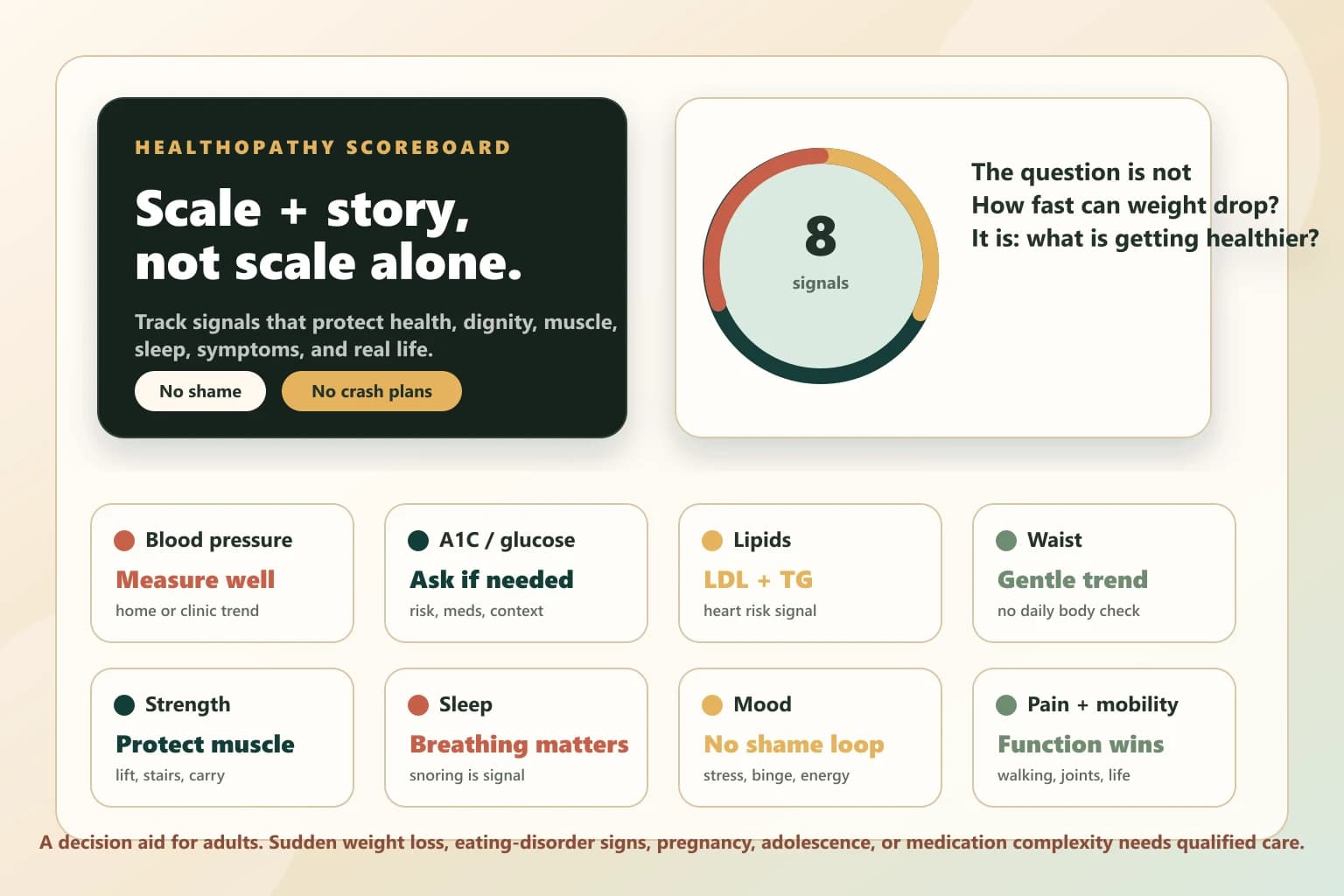
weight-loss-metabolic-dashboard.webp
Use: Hero or mid-page dashboard showing scale weight beside blood pressure, A1C, lipids, waist, strength, sleep, pain, and mood.
Avoid: Before-after bodies, measuring-tape waist closeups, sad scale photos, miracle-product bottles, or any image that turns body size into spectacle.
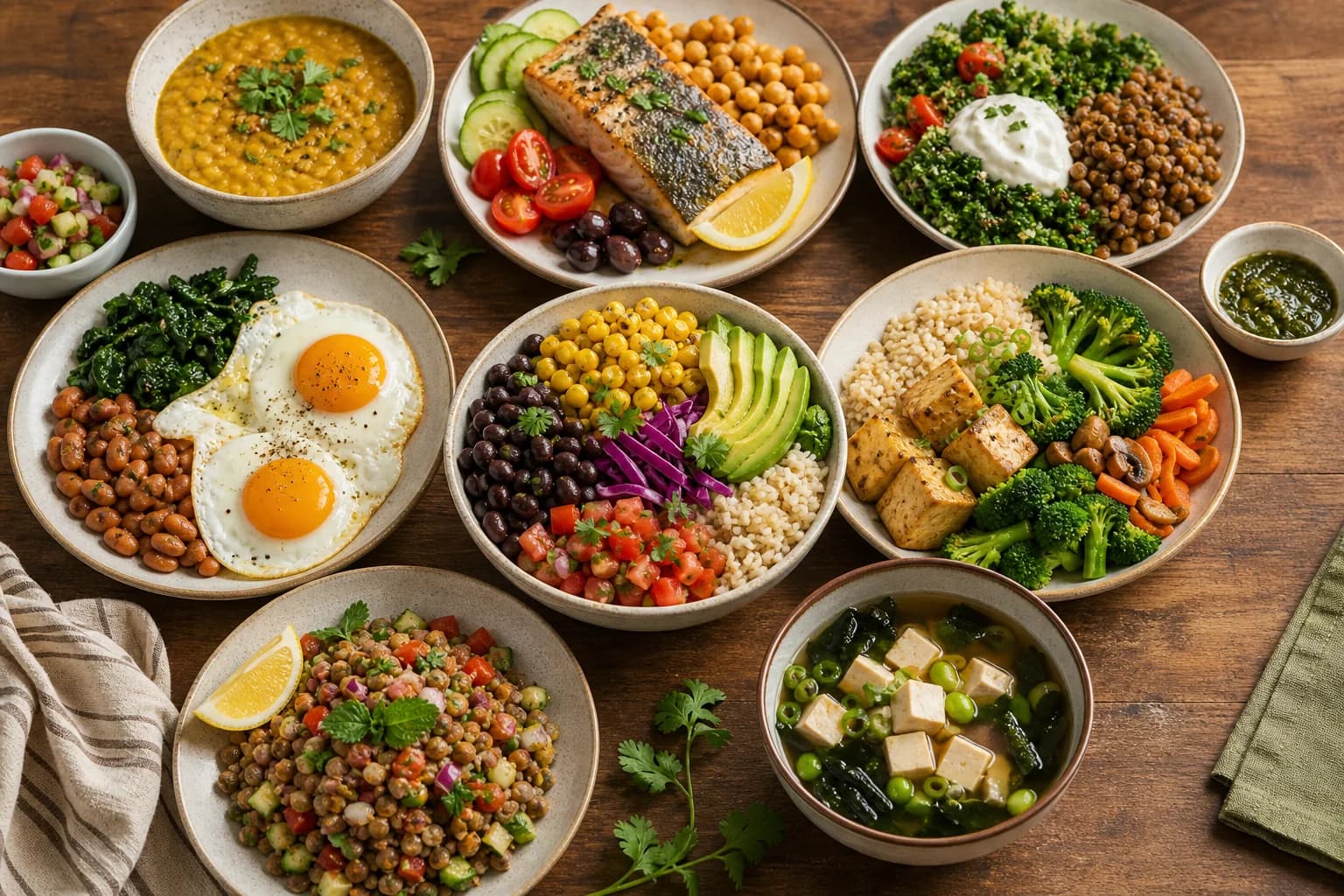
weight-loss-global-satiety-plates.webp
Use: A warm, real-food collage showing culturally flexible protein, fiber, starch, fat, and color across South Asian, Mediterranean, Middle Eastern, Latin, East Asian, and Western meals.
Avoid: Tiny diet plates, sterile salad-only meals, bodybuilder meal prep, or Western-only food examples.
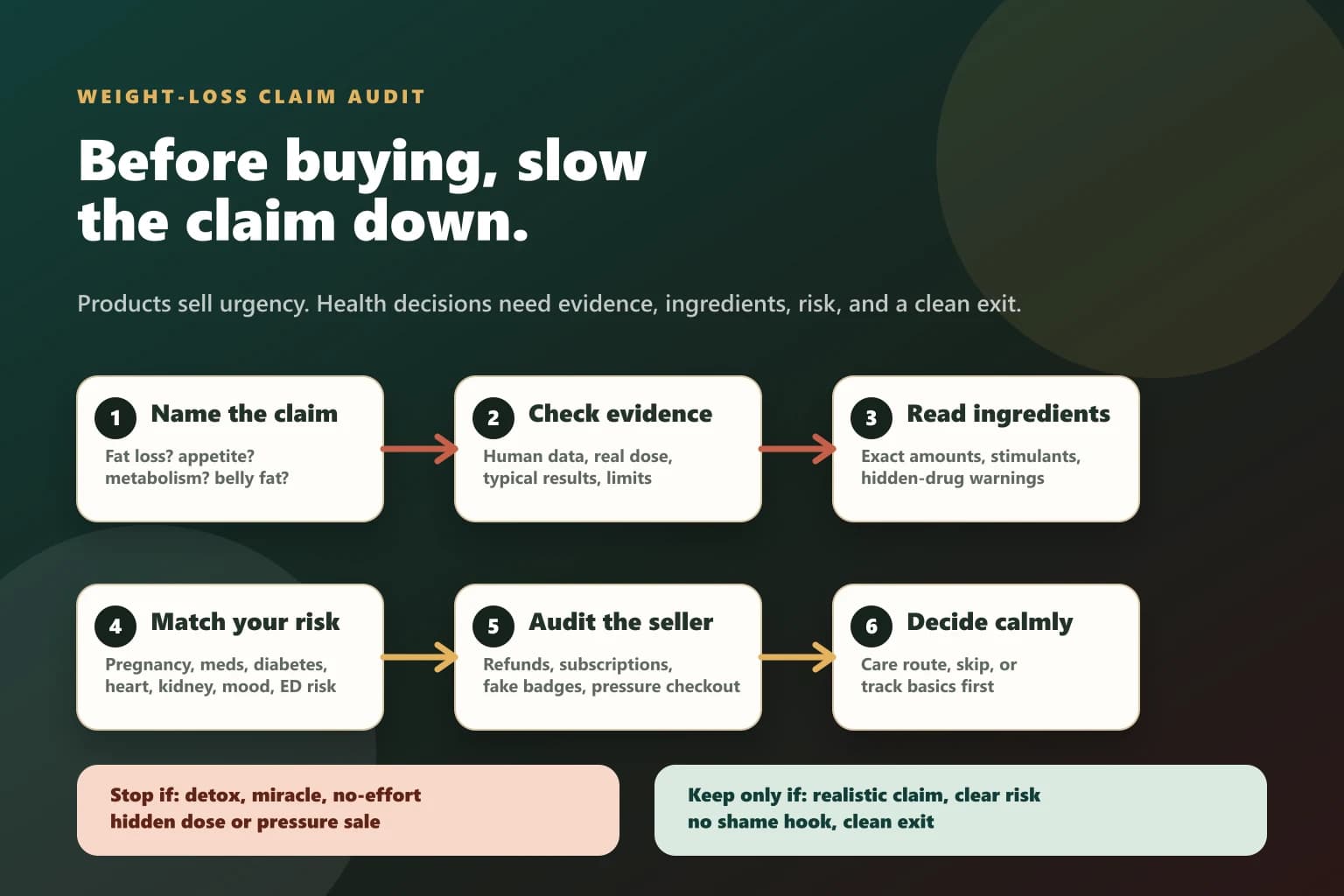
weight-loss-claim-audit-flow.webp
Use: An infographic that walks through claim, evidence, exact ingredients, contraindications, seller transparency, subscription terms, and stop-shopping signals.
Avoid: Fake clinical seals, dramatic lightning effects, pill glamour shots, or any graphic that makes supplements look endorsed.
Indexing readiness
This cluster is useful for readers who reach it from Healthopathy, but it should not compete in search yet. Weight-loss content is medically and emotionally high risk, and this page still lacks qualified reviewer sign-off.
Hard stops are visible before practical advice: rapid unexplained loss, eating-disorder signs, pregnancy, adolescence, chronic disease, and medication complexity.
The hub uses CDC, NIDDK, FDA, FTC, NIMH, and dietary-guidance sources as the minimum floor.
Two protected guides now support the hub: one on health-first weight loss and one on protein, fiber, and satiety.
Visual briefs now prioritize decision aids and real-food context instead of body-transformation imagery.
No named qualified dietitian or clinician has reviewed the high-risk weight-loss claims yet.
The hub and its two weight-loss support articles should remain noindex until qualified review is complete.
| Claim lane | Verdict | Reason |
|---|---|---|
| Rapid weight loss, detox, cleanse, fat burner, or no-effort promise | Blocked | This is the highest-risk commercial lane. It invites dehydration, stimulant misuse, laxative use, hidden-ingredient exposure, or false hope. |
| Healthy weight loss improves blood pressure, blood sugar, or lipids | Allowed with limits | Keep it framed as possible risk improvement, not a guarantee. Readers with medical conditions need care and medication review. |
| Protein, fiber, strength, walking, sleep, and environment help | Allowed | This is practical lifestyle education when it stays flexible, culturally usable, and honest about medical complexity. |
| Weight-loss medications or surgery may help some adults | Care-routing only | The page can explain that these options exist, but eligibility, risk, dosing, monitoring, pregnancy context, and stopping plans belong with qualified care. |
| Affiliate reviews, programs, supplements, teas, devices, or apps | Not ready | No paid or affiliate weight-loss content should launch until Healthopathy has explicit review criteria, disclosure, safety filters, and reviewer sign-off. |
Review workflow
The content can keep improving in public, but search indexing should wait until these review gates are complete. That is the adult decision for a topic that can harm people when handled casually.
A registered dietitian, obesity-medicine clinician, endocrinology/primary-care clinician, or eating-disorder-informed clinician should review the relevant sections before indexing.
The reviewer should check each statement about weight loss, metabolic markers, medications, eating behavior, protein, fiber, exercise, and product risk.
Prescription-drug discussion should route readers to care, not imply dosing, eligibility, substitutions, stacking, or online shortcuts.
Language must avoid triggering restriction, body checking, purging, laxative use, compulsive exercise, or shame-based urgency.
Food examples should work beyond a U.S. wellness audience, including vegetarian, halal, budget, family-meal, and regional eating patterns.
Related lane
Use this when the goal is healthspan, strength, sleep, metabolic health, and sustainable routines.
Related lane
Use this when weight overlaps with blood pressure, cholesterol, diabetes risk, smoking, chest symptoms, or family history.
Related lane
Use this when snoring, short sleep, shift work, insomnia, or daytime sleepiness keeps pulling the plan apart.
Related lane
Use this for PCOS, menopause transition, pregnancy context, cycle changes, pelvic pain, and hormone-related questions.
Protected support guide
This guide is live for readers on this protected pathway, but it stays out of search while the weight-loss topic earns a stronger qualified review and final indexing decision.
A safety-first guide to healthy weight loss, metabolic markers, satiety, strength, sleep, medications, eating-disorder red flags, and product claims.
A practical guide to using protein, fiber, meal rhythm, and culture-aware food choices for steadier appetite without shame, restriction, or supplement hype.
Read next
A practical, culture-flexible food framework for healthspan: protein, fiber-rich plants, staple foods, healthy fats, sodium, sugar, budget, and medical safety.
A practical, safety-first guide to strength training for healthspan: what counts, how to start, how to progress, and when to get personal guidance.
A practical, safety-first guide to sleep for healthspan: duration, quality, timing, sleep apnea, insomnia, recovery, and when to seek care.
A practical, safety-first guide to Zone 2 cardio: the talk test, heart-rate limits, beginner plans, weekly dose, strength training, and when to seek care.
Source backbone
This page uses official public-health, NIH, FDA, FTC, and dietary guidance sources as the floor. Future articles need condition- specific evidence, reviewer notes, and clearer global food examples. The current decision is to keep this cluster protected until a qualified reviewer signs off.
Protected status
Weight loss is too medically and emotionally loaded to index without qualified review. The support article base, visual brief, and claim audit are now in place; the remaining gap is named clinical or dietitian review.
Completed support guide: Weight Loss for Health: What Actually Matters.
Completed support guide: Protein, Fiber, and Satiety Without Diet Culture.
Final Phase 4 decision: keep /weight-loss and both support guides noindexed until qualified review is complete.