The short answer
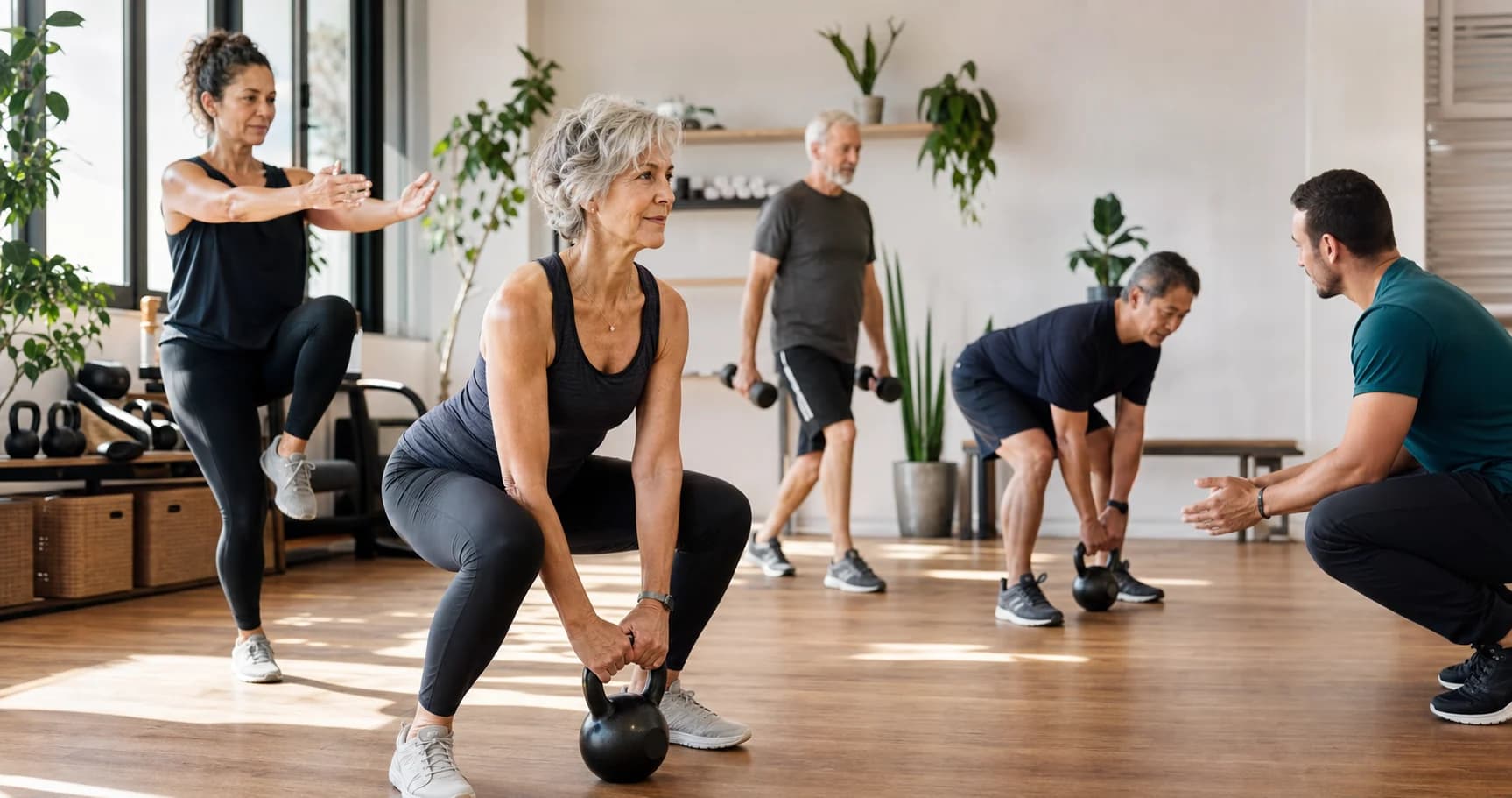
Strength training is one of the most practical healthspan habits because it protects the body parts of longevity that people actually feel: getting up from a chair, carrying groceries, climbing stairs, playing with children, recovering after illness, avoiding falls, keeping bone and joint capacity, and staying independent for longer.
You do not need to become a gym person. You need to give your muscles, bones, tendons, balance system, and nervous system a reason to stay useful.
For most adults, the public-health target is simple: keep doing aerobic activity across the week and add muscle-strengthening activity on 2 or more days. For older adults, the plan should also include balance work. For people with chronic conditions, pain, disability, pregnancy, frailty, or long inactivity, the plan should be adapted, not abandoned.
The Healthopathy strength rule is this:
Start easier than your ego wants. Repeat it. Progress slowly. Protect joints. Train movements you need in life. Stop pretending soreness is the goal.
Strength is not gym culture
A lot of people hear "strength training" and imagine mirrors, machines, heavy barbells, young bodies, protein ads, and people who already know what they are doing.
That image is too small.
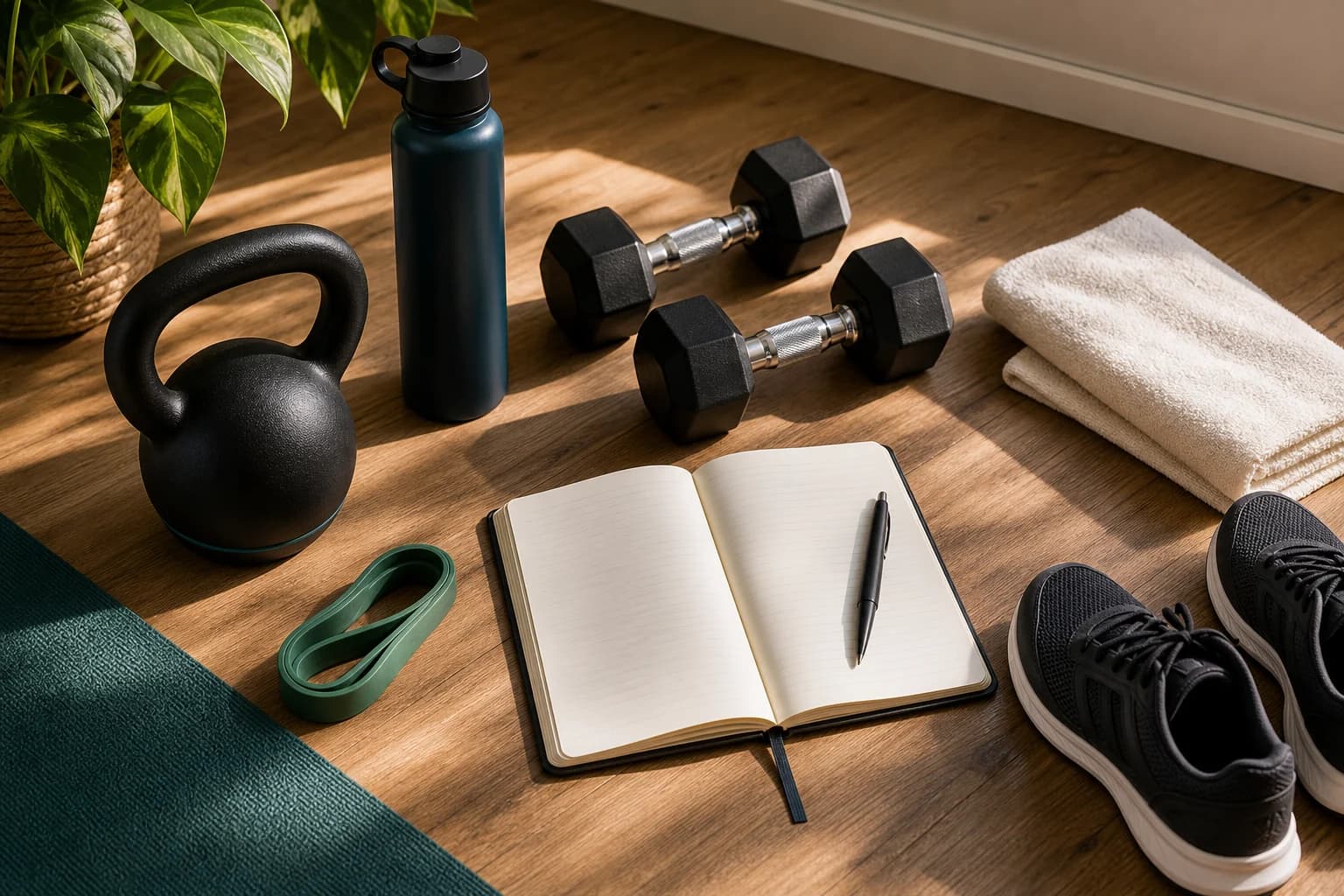
Strength training means working muscles against resistance. That resistance can be your bodyweight, a wall, a chair, a resistance band, a dumbbell, a kettlebell, a cable machine, a backpack, a water jug, a sandbag, a barbell, a weight machine, or another human helping you practice a movement safely.
The goal is not to copy fitness culture. The goal is to keep capacity.
Capacity is the quiet currency of healthspan. Can you stand from the floor? Can you lift luggage? Can you carry food from the market? Can you climb steps without fear? Can you keep your balance when someone bumps you? Can you keep doing the work, rituals, care, prayer, sport, sex, travel, gardening, dancing, and family life that matter to you?
Strength training is not the whole answer. It does not replace walking, food quality, sleep, medical care, mental health support, or relationships. But it solves a problem that walking alone cannot solve: the body loses strength when it is not asked to produce strength.
Why strength matters for longevity
Longevity is not only about avoiding death. It is also about avoiding the slow shrinkage of your world.
Weakness shrinks the world. First the heavy bag feels harder. Then stairs become optional. Then getting off the floor feels risky. Then travel becomes stressful. Then falls become frightening. Then independence depends on other people for tasks that once felt ordinary.
This does not happen to everyone in the same way. Genetics, disease, injury, work, nutrition, hormones, sleep, medications, disability, socioeconomic stress, and care access all matter. But the pattern is clear enough to take seriously: muscle and strength are not vanity tissues. They are survival tissues.
Strength training can support:
- Muscle mass and strength
- Bone loading and fracture resilience
- Balance and fall-risk reduction when combined with balance work
- Glucose handling and metabolic health
- Joint support and daily function
- Confidence with movement
- Independence with activities of daily living
- Training recovery and posture tolerance
- Sexual confidence and body trust for some people
It is not a guarantee. It is not an anti-aging spell. It is a high-return foundation.
What counts as strength training
The best strength program is not defined by the equipment. It is defined by the job.
Muscles must work against resistance. The work should be repeatable. The challenge should increase gradually. The movement should be safe enough for your body and useful enough for your life.
What counts as strength work
| Claim | Evidence | Practical meaning | Caution |
|---|---|---|---|
| Bodyweight training | Useful for beginners and experienced people when exercises are scaled well. | Sit-to-stand, wall push-ups, step-ups, bridges, split squats, planks, and carries can all build capacity. | Bodyweight is not automatically easy. Knees, shoulders, wrists, and balance still matter. |
| Resistance bands | Useful low-cost resistance that can train pulling, pressing, hips, shoulders, and rehab-style movements. | Good for home training, travel, older adults, and gradual progress. | Bands can snap or shift. Anchor them carefully and protect eyes. |
| Free weights | Dumbbells, kettlebells, and barbells allow measurable progressive loading. | Useful for squats, deadlift patterns, rows, presses, carries, and single-leg work. | Technique, progression, and recovery matter. Heavy is not automatically better. |
| Machines | Machines can safely load muscles with more stability and less balance demand. | Helpful for beginners, older adults, joint limitations, and people learning effort safely. | Machine setup matters. Adjust seat, handles, range, and load before chasing numbers. |
| Daily-life resistance | Loaded tasks can support function when repeated safely. | Carrying groceries, climbing stairs, gardening, lifting household objects, and manual work can count. | Random hard labor is not the same as progressive training. Repeated strain without recovery can injure. |
If you do not have a gym, start at home. If you do not have weights, start with a chair, wall, towel, band, backpack, stairs, or water bottles. If you have pain or medical complexity, start with a clinician, physical therapist, qualified trainer, or supervised class.
The point is not equipment. The point is progressive resistance.
The six movement patterns to train
A simple strength plan can cover most of the body with six patterns:
- Squat or sit-to-stand
- Hinge
- Push
- Pull
- Carry
- Core and balance control
These are not bodybuilding categories. They are life categories.
Squatting helps with chairs, toilets, stairs, picking things up, and leg confidence. Hinging helps with lifting, gardening, posture, and protecting the back by using hips. Pushing helps with getting up, moving objects, and upper-body function. Pulling helps shoulders, posture, grip, and carrying. Loaded carries train grip, trunk, hips, breathing control, and the very real task of moving things through the world. Balance and core control help you transfer force without feeling fragile.
The Healthopathy movement map
| Pattern | Beginner version | Progression | Real-life job |
|---|---|---|---|
| Squat | Sit-to-stand from a chair. | Goblet squat, split squat, step-up, leg press. | Standing, stairs, toilets, lifting from low positions. |
| Hinge | Hip hinge drill with hands on hips. | Glute bridge, Romanian deadlift, deadlift variation. | Picking things up without making the back do all the work. |
| Push | Wall push-up. | Incline push-up, floor push-up, dumbbell press, machine press. | Getting up, pushing doors, moving objects. |
| Pull | Band row. | Cable row, dumbbell row, assisted pull-down, machine row. | Posture, grip, shoulders, carrying, pulling objects. |
| Carry | Light suitcase carry. | Farmer carry, backpack carry, heavier one-side carry. | Groceries, luggage, children, work tasks. |
| Core and balance | Dead bug, supported single-leg stand. | Pallof press, side plank, heel-to-toe walking. | Fall prevention, trunk control, safer force transfer. |
This map is enough for most people to begin. You can get more specific later.
How hard should it feel?
Strength training has to be challenging enough to matter and easy enough to repeat.
That is the line.
For beginners, most sets should finish with the feeling that you could do 2 to 4 more good repetitions if you had to. This is often called leaving reps in reserve. You are not training to prove suffering. You are training to build capacity without stealing recovery from the rest of life.
Good effort feels like:
- Muscles working
- Breathing increased but controlled
- Form mostly steady
- Joints not sharply painful
- Confidence that you could repeat the plan next week
Bad effort feels like:
- Sharp pain
- Dizziness
- Chest pain
- Faintness
- Severe breathlessness
- Numbness or radiating symptoms
- Panic
- Technique falling apart
- Soreness so severe it disrupts normal life for days
The beginner mistake is doing too much on day one because motivation is high. The advanced mistake is never backing off because identity is tied to performance.
Both mistakes are expensive.
A beginner two-day plan
Two full-body sessions per week can be enough to start. The plan below is not magic. It is a template. Adjust load, range, and movement choice to your body.
Warm up for 5 to 8 minutes with easy walking, cycling, marching, mobility, or very light versions of the movements.
Two-day beginner strength plan
| Movement | Day A | Day B | Start here |
|---|---|---|---|
| Squat | Sit-to-stand or goblet squat | Step-up or leg press | 2 sets of 6 to 10 controlled reps |
| Hinge | Glute bridge or hip hinge drill | Light Romanian deadlift or cable pull-through | 2 sets of 6 to 10 controlled reps |
| Push | Wall or incline push-up | Dumbbell or machine press | 2 sets of 6 to 12 controlled reps |
| Pull | Band row | Cable row or machine row | 2 sets of 8 to 12 controlled reps |
| Carry | Suitcase carry | Farmer carry | 2 short carries per side |
| Core and balance | Dead bug or supported single-leg stand | Pallof press or heel-to-toe walk | 2 easy sets with steady breathing |
Rest 1 to 2 minutes between sets if you need it. More rest is not failure. It is how quality stays high.
If this plan feels too easy, good. Do it for 2 weeks and earn the right to progress. If it feels too hard, cut it in half. A plan you can repeat is stronger than a plan you quit.
How to progress without getting hurt
Progression is the heart of strength training.
But progression does not mean adding weight every session forever. Bodies are not spreadsheets. Sleep, stress, menstrual cycle, menopause, work, parenting, travel, pain, illness, alcohol, food, and mood all affect training.
Use a progression ladder:
- First, learn the movement.
- Then increase consistency.
- Then add repetitions.
- Then add sets.
- Then add range of motion if safe.
- Then add resistance.
- Then add complexity.
Most people skip steps 1 through 5 and chase step 6. That is why they get sore, scared, or injured.
Progression without chaos
| If this is true | What to do next | What not to do |
|---|---|---|
| You are still learning the movement | Keep the load easy and practice control. | Do not test maxes or chase fatigue. |
| You completed all sets with clean form twice | Add 1 to 2 reps per set or a small amount of load. | Do not change every variable at once. |
| Joints ache more each week | Reduce load, range, volume, or frequency and review technique. | Do not push through sharp or worsening pain. |
| You feel crushed for days after training | Cut total sets by 30 to 50 percent for a week. | Do not confuse poor recovery with dedication. |
| You are bored but pain-free and consistent | Change one movement variation or add a small challenge. | Do not rebuild the whole program every Monday. |
The best program is usually boring enough to measure. If everything changes every week, you cannot tell what is working.
Strength by age, ability, and life stage
The principles are shared. The application changes.
A 25-year-old office worker, a 39-year-old postpartum mother, a 48-year-old night-shift worker, a 56-year-old in perimenopause, a 68-year-old with arthritis, and a 78-year-old recovering from a fall do not need the same starting point.
How to adapt the starting point
| Claim | Evidence | Practical meaning | Caution |
|---|---|---|---|
| Young or midlife beginner | Public-health guidance supports muscle-strengthening work for adults, not only older adults. | Use two full-body sessions, learn patterns, build consistency, and add walking or cardio. | Do not let ego choose loads before technique and recovery exist. |
| Older adult | CDC and WHO guidance includes muscle-strengthening and balance work for older adults. | Prioritize sit-to-stand, step-ups, safe hinges, rows, carries, and balance near support. | Falls history, osteoporosis, frailty, medications, and dizziness change the plan. |
| Women around menopause | Strength training can support muscle and bone capacity as hormones and body composition change. | Train progressively, include impact only if appropriate, eat enough protein, and protect recovery. | Heavy bleeding, pelvic symptoms, severe pain, osteoporosis, or high fracture risk need personal care. |
| Chronic condition or disability | CDC notes adults with chronic conditions or disabilities can be active and benefit, with adaptation. | Use modified range, machines, bands, seated options, water work, or supervised sessions. | Ask qualified care what type and amount of activity fits your condition. |
| Very busy adult | Consistency drives adaptation more than perfect program design. | Two 25-minute sessions can cover squat, hinge, push, pull, carry, and core. | Do not build a fantasy program that only works during a quiet life season. |
Strength training should make the body feel more available, not more punished.
Women, bones, and strength
Women are often sold two bad stories.
The first says strength training will make them bulky, unfeminine, or less graceful. The second says they must train like a motivational slogan every day or they are failing their future bones.
Both are unhelpful.
Strength training can be a serious tool for women because muscle, bone, balance, metabolic health, pelvic confidence, and body trust matter across the life course. Puberty, pregnancy, postpartum recovery, perimenopause, menopause, caregiving stress, sleep disruption, thyroid disease, iron deficiency, autoimmune conditions, and cultural pressure can all affect training.
The starting point should be respectful, not frantic.
Useful principles:
- Train major movement patterns.
- Progress gradually.
- Include balance and impact only when appropriate.
- Eat enough to recover.
- Do not ignore pelvic pain, leaking, pressure, heavy bleeding, dizziness, or severe fatigue.
- Use professional support when symptoms are not straightforward.
Strength training is not a punishment for body size. It is a way to keep options open.
Men, ego, and injury
Men are often sold a different problem: strength as identity.
That story creates its own risks. It can push people to lift too heavy too soon, ignore pain, avoid medical care, chase testosterone claims, train through poor sleep, or treat warmups and mobility as weakness.
A good longevity strength plan for men is not about proving toughness. It is about staying capable without being stupid.
The basics still win:
- Learn technique.
- Train legs, hips, back, chest, shoulders, arms, trunk, grip, and balance.
- Keep aerobic work.
- Sleep enough to recover.
- Do not hide chest symptoms, erectile changes, severe fatigue, or breathlessness behind gym identity.
- Be skeptical of "testosterone boosting" products and extreme performance claims.
If strength training makes someone more fragile, angry, injured, or medically avoidant, the plan has lost the plot.
What strength training can and cannot do
Strength training can improve capacity. It can support health. It can change body composition. It can improve confidence. It can make daily life easier. It can be part of chronic disease prevention and management when appropriate.
It cannot guarantee longevity. It cannot cancel smoking, poor sleep, uncontrolled blood pressure, severe stress, unsafe relationships, untreated disease, or a chaotic diet. It cannot diagnose pain. It cannot replace physical therapy after injury. It cannot make every body look the same. It cannot make aging disappear.
Evidence claims and boundaries
| Claim | Evidence | Practical meaning | Caution |
|---|---|---|---|
| Adults should do strength work | Strong public-health guidance from WHO, CDC, and HHS. | Train major muscle groups on 2 or more days if medically appropriate. | Guidelines are population-level. Personal risk still matters. |
| Strength training supports independence | Strong functional rationale and public-health guidance for older adults. | Train the movements that keep daily tasks easier. | Falls risk needs balance work, vision, medication review, home safety, and care, not strength alone. |
| Strength training may lower mortality risk | Observational studies and meta-analyses associate muscle-strengthening activity with lower mortality and chronic disease risk. | It is reasonable to treat strength as a core healthspan habit. | Association is not proof of a guaranteed life-extension effect for an individual. |
| More is always better | Not supported as a simple rule. | Enough consistent work beats heroic volume for most people. | Excess volume can injure, exhaust, or crowd out sleep, cardio, food, and life. |
Common mistakes
Most strength mistakes are predictable.
The first is starting too hard. A person has a burst of motivation, does five exercises too heavy, gets sore for four days, and decides their body is not built for strength training. The problem was not the body. The problem was the dose.
The second is only training favorite muscles. Chest and arms for some. Glutes for others. Random ab exercises for many. Healthspan needs legs, hips, back, trunk, grip, balance, and the ability to produce force in more than one direction.
The third is program hopping. If the plan changes constantly, the body gets novelty but not enough repeated signal to adapt.
The fourth is ignoring pain until it becomes identity. Pain is information. It is not always danger, but it is not meaningless either.
The fifth is replacing training with shopping: shoes, watches, belts, supplements, apps, memberships, and gear before a basic plan exists.
How to support strength with food and sleep
Strength training creates the signal. Recovery lets the body respond.
You do not need a perfect diet to start training. But if you train hard while eating too little protein, too little total food, too little fiber, and sleeping badly, progress will feel worse than it needs to.
Useful support habits:
- Eat a protein source with meals.
- Include fiber-rich plants and minimally processed carbohydrates.
- Hydrate enough for your climate and activity.
- Do not train hard after heavy alcohol.
- Protect a regular sleep window where possible.
- Take easier sessions during illness, travel, high stress, or poor sleep.
- Do not use fasting to punish appetite if it harms training or triggers disordered eating.
Protein can be local and cultural: lentils, beans, tofu, tempeh, eggs, yogurt, paneer, fish, poultry, meat, soy, peas, nuts, seeds, or mixed meals. The point is not one elite diet. The point is giving muscles material to repair.
If you have kidney disease, diabetes, pregnancy, eating-disorder history, gastrointestinal disease, allergies, or medication restrictions, food advice needs personal care.
The 30-day starter plan
This is a starter, not a transformation challenge.
The goal is to finish the month with better movement confidence, not a dramatic before-and-after photo.
30-day strength starter
| Week | Focus | What to do | What success looks like |
|---|---|---|---|
| Week 1 | Learn the patterns | Do one very easy full-body session: sit-to-stand, wall push-up, band row, glute bridge, light carry, supported balance. | You finish feeling like you could do it again in 2 days. |
| Week 2 | Repeat twice | Do two full-body sessions with 1 to 2 sets per movement. Keep effort moderate. | No sharp pain, no severe soreness, and better confidence with the movements. |
| Week 3 | Add a little volume | Add one extra set to 2 movements or add 1 to 2 reps per set. | You can see progress on paper without feeling beaten up. |
| Week 4 | Make it sustainable | Keep two sessions. Choose the movements that felt most useful and set your next 4-week plan. | You know your starting weights, reps, and safe progression step. |
Track only a few things:
- Exercise
- Sets and reps
- Load or difficulty
- Pain or symptoms
- Energy the next day
- One daily-life win
Daily-life wins count. Stairs felt easier. Carrying bags felt less annoying. You stood from the floor with less drama. Your back trusted you more. Those are healthspan signals.
When to get personal guidance
A generic strength article is not enough for everyone.
Get personal guidance if you have:
- Chest pain, fainting, severe breathlessness, or heart disease history
- Uncontrolled blood pressure
- Stroke history or neurological symptoms
- Pregnancy or postpartum complications
- Osteoporosis, recent fracture, or high fall risk
- Severe arthritis, joint instability, or worsening pain
- Recent surgery
- Cancer treatment or major illness recovery
- Diabetes with medication or hypoglycemia risk
- Kidney disease or other complex chronic disease
- Eating-disorder history
- Pelvic pain, leaking, pressure, or postpartum symptoms
- Long inactivity with fear, frailty, or dizziness
Guidance does not mean weakness. It means your plan deserves to fit your body.
The bottom line
Strength training for longevity is not about becoming extreme. It is about refusing to let life get smaller earlier than it has to.
Train the major patterns. Start with two days. Use resistance you can control. Progress slowly. Add balance, especially with age. Keep walking or other aerobic work. Eat and sleep enough to recover. Get personal guidance when risk is higher.
The goal is not to look like someone else.
The goal is to keep your body useful for the life you are trying to live.