The short answer
There is no single "longevity diet" that every person on earth should copy.
The strongest food pattern for healthspan is built from repeatable principles: enough protein, plenty of fiber-rich plant foods, mostly minimally processed staples, healthy fats that fit the cuisine, less excess sodium and added sugar, enough water, and meals that work inside culture, budget, religion, appetite, medical needs, and real family life.
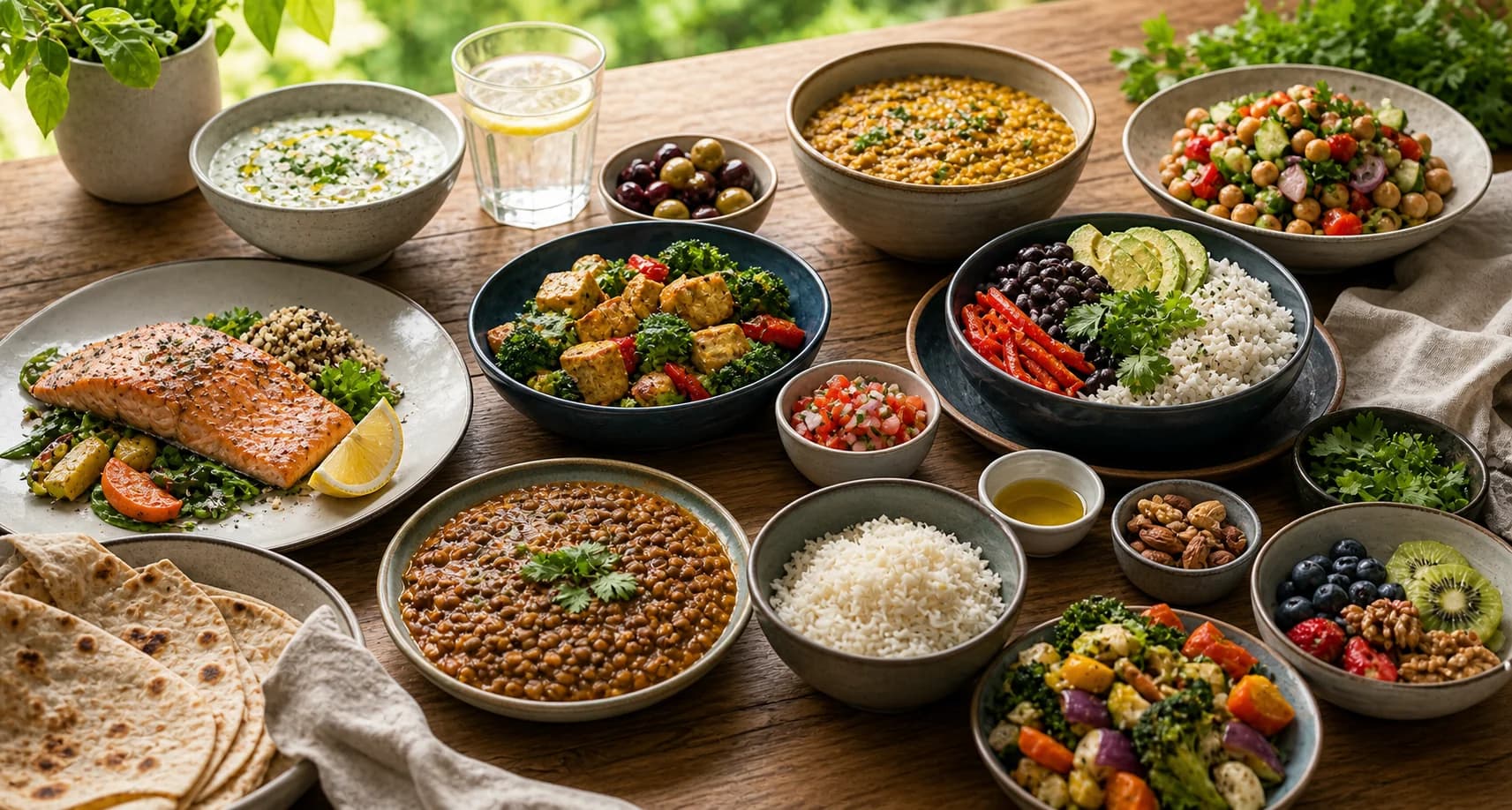
That means a longevity plate can look like dal, sabzi, yogurt, and roti. It can look like beans, rice, avocado, salsa, and fish. It can look like tofu, vegetables, rice, soup, and fruit. It can look like lentil stew, greens, sorghum, and eggs. It can look like chickpeas, olive oil, vegetables, whole-grain bread, and yogurt. The plate does not need to look Western, expensive, raw, low-carb, vegan, paleo, Mediterranean, or "clean" to be useful.
The goal is not dietary purity. The goal is a food pattern that supports blood pressure, blood sugar, lipids, gut health, muscle, recovery, energy, sexual health, mood, and long-term capacity without making eating stressful or culturally empty.
What this article is and is not
This is a food-principles guide for generally healthy adults who want a better baseline.
It is not a treatment plan for diabetes, kidney disease, eating disorders, inflammatory bowel disease, pregnancy complications, food allergies, severe weight loss, cancer, heart failure, or medication-specific diets. It is not a fasting prescription. It is not a supplement plan. It is not a promise that eating one way will prevent disease or extend life by a fixed number of years.
Food matters because it shapes everyday biology. Meals affect energy intake, blood glucose patterns, blood pressure, blood lipids, gut function, micronutrient adequacy, muscle repair, sleep quality, training recovery, appetite, mood, inflammation signals, and how easy it is to repeat other health habits.
Food also matters because people do not eat nutrients in isolation. They eat with families, schedules, traditions, taste, money, grief, celebration, religion, work shifts, cooking skills, neighborhood access, and bodies that may already have disease or pain.
Healthopathy's standard is simple: a food article should make better eating feel more possible, not more shameful.
The Healthopathy plate formula
A plate formula is useful only if it survives real life.
The point is not to weigh every ingredient forever. The point is to build meals that repeatedly include the parts most people under-eat, while reducing the parts that commonly push health in the wrong direction when they dominate the diet.
The practical longevity plate
| Claim | Evidence | Practical meaning | Caution |
|---|---|---|---|
| Fiber-rich plants | Strong public-health guidance supports regular intake of vegetables, fruits, legumes, and whole grains. | Include a vegetable, fruit, legume, whole grain, nut, or seed at most meals. Start with one addition if the current diet is low in plants. | Digestive conditions, kidney disease, food intolerance, or low appetite may require slower changes or personal guidance. |
| Clear protein source | Protein supports muscle repair, immune function, satiety, and healthy aging when paired with activity. | Use lentils, beans, tofu, tempeh, eggs, yogurt, fish, poultry, lean meat, paneer, soy, peas, nuts, seeds, or mixed meals. | Kidney disease, some liver disease, pregnancy, frailty, or major illness changes protein planning. |
| Minimally processed staple | Healthy dietary patterns commonly include whole grains, starchy vegetables, legumes, or other staple carbohydrates in appropriate portions. | Choose rice, oats, millet, sorghum, whole-grain bread, corn, potatoes, roti, noodles, or local staples in a portion that supports energy and glucose control. | Diabetes, high triglycerides, digestive disease, or athletic training may change portion and timing. |
| Fat that improves the meal | Guidelines consistently favor replacing trans fats and excess saturated fats with unsaturated fat sources where possible. | Use nuts, seeds, avocado, fish, olive oil, mustard oil, canola oil, peanut oil, sesame, tahini, or other culturally familiar fats in sensible amounts. | Calories can rise quickly; deep frying, repeated reheated oils, and large portions can undo the advantage. |
| Flavor without sodium overload | Excess sodium is linked to higher blood pressure risk, and salt reduction is a major public-health priority. | Use herbs, spices, garlic, ginger, citrus, vinegar, chili, fermented foods in smaller amounts, and lower-sodium versions when useful. | Some people with heavy sweating, certain medications, or medical conditions need individualized sodium advice. |
This is the core: plants, protein, staple, fat, flavor, water.
You can make it simple:
- Add one plant food.
- Add one protein anchor.
- Keep the staple food, but adjust its portion and quality.
- Use fat for flavor, not as the whole meal.
- Reduce sugary drinks and constant ultra-processed snacks before chasing advanced rules.
That basic pattern beats most dramatic diet identities.
Protein: not bodybuilder culture, not optional
Longevity nutrition often talks about plants and forgets muscle.
That is a mistake. Healthspan depends on function: standing up, carrying, climbing, healing, training, recovering, and staying independent. Protein is not the whole story, but it is one of the materials the body uses to maintain and repair tissues.
Protein does not have to mean a steak culture, protein-powder culture, or gym culture. It can be humble and local.
Protein anchors by food culture
| Food pattern | Protein anchors | How to make it more healthspan-friendly | Watch point |
|---|---|---|---|
| South Asian | Dal, chana, rajma, yogurt, paneer, eggs, fish, chicken, soy, peanuts. | Pair legumes or protein with vegetables and roti, rice, millet, or other staples; add salad or cooked greens when possible. | Large oil portions, fried snacks, sugary tea, and very salty pickles can dominate otherwise strong meals. |
| Mediterranean and Middle Eastern | Chickpeas, lentils, beans, yogurt, fish, eggs, poultry, tahini, nuts. | Build around vegetables, legumes, olive oil, herbs, fish, whole grains, and yogurt. | Processed meats, excess refined bread, sweets, and salty cheeses can push the pattern away from the base. |
| East and Southeast Asian | Tofu, tempeh, fish, seafood, eggs, soy foods, poultry, beans. | Use vegetables, soups, rice or noodles, fermented flavors, and protein in balanced portions. | Soy sauce, salty broths, fried foods, and sugary drinks can raise sodium and added sugar. |
| Latin American | Beans, eggs, fish, poultry, yogurt, cheese, lentils, nuts, seeds. | Beans plus corn, vegetables, salsa, avocado, fish, and fruit can make a strong plate. | Sugary drinks, fried refined snacks, processed meats, and oversized refined starch portions can become the problem. |
| African and Caribbean | Beans, peas, lentils, fish, eggs, poultry, yogurt, groundnuts, seeds. | Use stews, greens, beans, fish, millet, sorghum, plantain, cassava, rice, or maize with more vegetables and sensible oil. | Salted meats, high-sodium seasoning, sweet drinks, and very oily preparations may need adjustment. |
The practical question is not, "Which protein is morally superior?"
The better question is, "Can I identify the protein in this meal, and does it help me feel steady, recover, and preserve muscle?"
Vegetarian and vegan patterns can work when they are intentional. Legumes, soy foods, nuts, seeds, whole grains, and fortified foods can carry a lot of the load. Strict vegan diets need more attention to vitamin B12 and sometimes vitamin D, iodine, iron, omega-3, calcium, and protein quality. That does not make vegan eating bad. It means the plan must be honest.
Omnivore patterns can also work when the plate does not become mostly processed meat, fried food, refined starch, and little fiber.
Fiber is the quiet powerhouse
If Healthopathy had to pick one boring nutrition upgrade with huge practical value, it would be this: eat more fiber-rich foods, slowly enough that your gut can adapt.
Fiber is not glamorous. It is also not just about bowel movements.
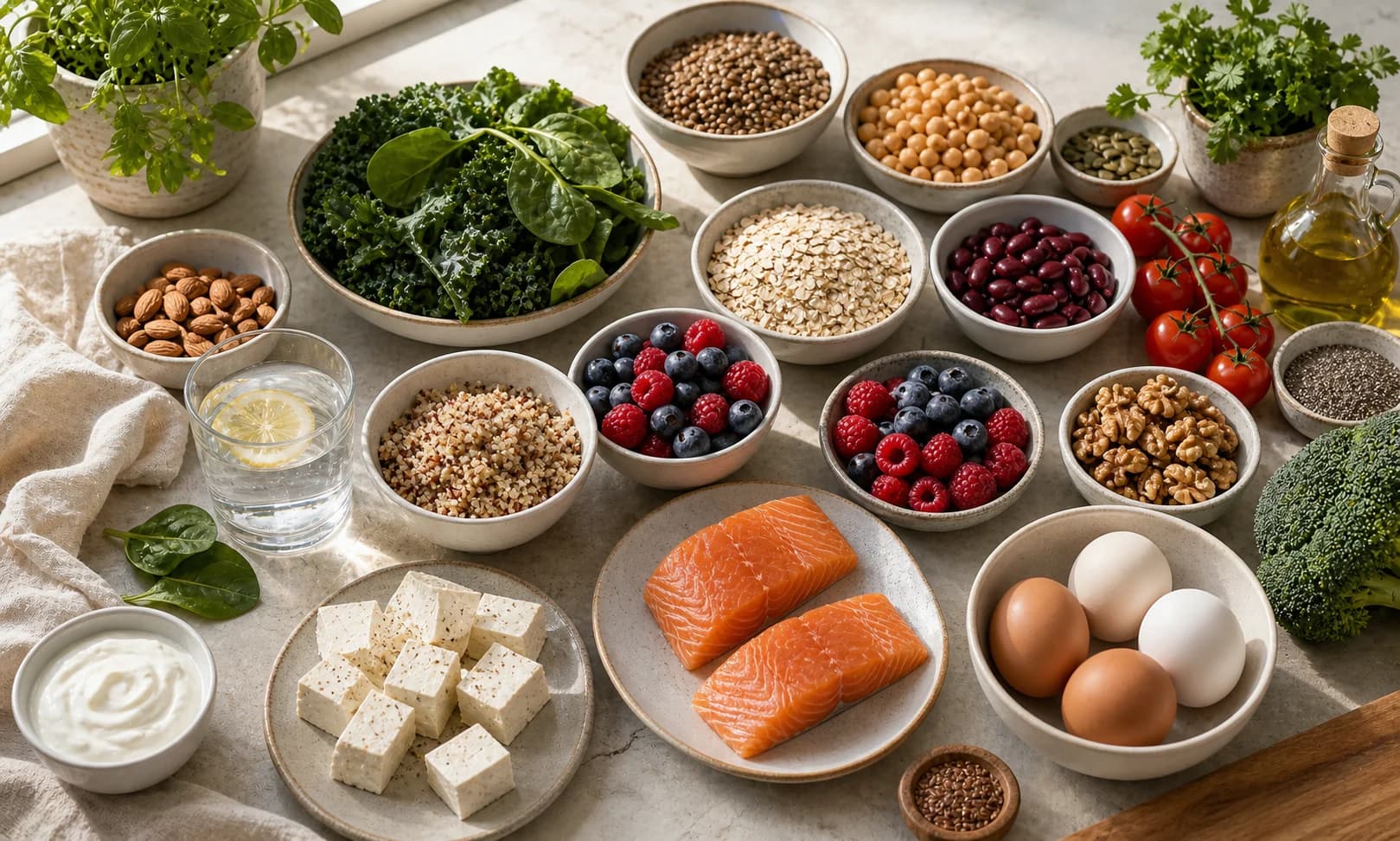
Fiber-rich foods tend to bring vitamins, minerals, phytochemicals, water, texture, chewing, fullness, and better meal structure. Legumes, vegetables, fruit, whole grains, nuts, and seeds are not magic. But they repeatedly show up in strong dietary patterns because they help the meal do more work.
The mistake is trying to jump from low fiber to a huge bean-and-raw-vegetable diet overnight. That can cause bloating, gas, pain, and quitting.
Start smaller:
- Add lentils or beans to one meal twice this week.
- Add cooked vegetables if raw vegetables bother your gut.
- Swap one refined snack for fruit, yogurt, nuts, or roasted chickpeas.
- Add oats, barley, millets, whole-grain bread, or a local whole grain if you tolerate it.
- Drink enough water when increasing fiber.
Fat quality matters more than oil tribalism
People fight about oils as if one bottle will decide their fate.
The better question is fat quality and cooking pattern.
Most guidance points in the same general direction: avoid industrial trans fats, reduce excess saturated fat when it dominates the diet, and use mostly unsaturated fat sources. That can mean different things in different kitchens: olive oil, canola oil, mustard oil, peanut oil, sesame oil, avocado, nuts, seeds, tahini, oily fish, or other local options.
This does not mean every traditional fat is poison. It means the full pattern matters:
- How much fat is used?
- Is it mostly deep frying?
- Is the oil repeatedly reheated?
- Is the meal also high in salt and refined starch?
- Are vegetables, legumes, and protein present?
- Is the person's LDL cholesterol, blood pressure, diabetes risk, or heart disease history changing the stakes?
Oil is not a personality. It is an ingredient.
Sodium, sugar, alcohol, and ultra-processed foods
The fastest improvement for many people is not a new superfood. It is reducing the foods and drinks that quietly crowd out the base.
Excess sodium often hides in packaged foods, restaurant meals, sauces, pickles, processed meats, salty snacks, instant noodles, bouillon, spice mixes, and breads. Added sugar often hides in soft drinks, sweet tea, coffee drinks, desserts, breakfast cereals, packaged snacks, sauces, and "healthy" sweetened products. Alcohol can add calories, disrupt sleep, raise injury risk, worsen reflux, affect libido and mood, and complicate medications.
Ultra-processed foods are not automatically evil in every single serving. Food access is unequal, and some packaged foods are useful, affordable, or necessary. The problem is when the pattern becomes mostly engineered snacks, sweet drinks, refined starch, processed meats, low fiber, high sodium, and low protein.
High-return swaps without food shame
| If this is common | Try this first | Why it helps | Do not turn it into |
|---|---|---|---|
| Sugary drinks most days | Replace one daily drink with water, sparkling water, unsweetened tea, or diluted options. | Liquid sugar is easy to overconsume and often does not improve fullness. | A rule that makes every celebration feel forbidden. |
| Very salty packaged meals | Use lower-sodium versions, rinse canned foods when appropriate, add vegetables, or split portions with home foods. | Lower sodium patterns can support blood pressure for many people. | A belief that all packaged food is morally bad. |
| Low-protein breakfast | Add yogurt, eggs, tofu, beans, lentils, nuts, seeds, milk, soy milk, or leftovers. | A protein anchor can reduce energy crashes and support training recovery. | Protein obsession or replacing meals with powders by default. |
| Almost no vegetables | Add one cooked vegetable or salad to one meal per day. | Small repeatable increases beat dramatic plans that fail. | Forcing raw vegetables if your gut hates them. |
| Frequent evening snacks | Check dinner protein, fiber, sleep, stress, and alcohol first. | Cravings are often a system signal, not a willpower defect. | Punishment, fasting panic, or shame. |
Culture is not a side note
Bad nutrition content does two things. First, it pretends there is one elite plate. Second, it makes people feel that their family food is the problem.
Sometimes a family pattern does need adjustment. Deep frying every day, sugary drinks, very large refined portions, very little protein, little fiber, high sodium, and low produce can harm health regardless of culture. But the solution should usually be translation, not erasure.
If the family eats rice, the question is not "How do I remove rice forever?" The question is: What is the portion? What is the protein? Where are the vegetables or legumes? Is there a sugary drink? Is the meal mostly refined, fried, and salty, or balanced and satisfying?
If the family eats bread, the question is similar.
If the family eats noodles, tortillas, cassava, plantain, potatoes, couscous, injera, millet, oats, maize, or pasta, the principle is the same. Staple foods are not automatically the villain. The whole plate decides the direction.
Translate the principle, do not copy the plate
| Principle | One possible expression | Another expression | What matters most |
|---|---|---|---|
| More legumes | Dal, chana, rajma, or sambar. | Black beans, lentil soup, hummus, peas, or bean stew. | Regular fiber-rich protein that fits the cuisine. |
| More vegetables | Cooked sabzi, greens, salad, soup vegetables. | Stir-fried greens, roasted vegetables, salsa, slaw, okra, eggplant. | A repeatable vegetable habit, not the same vegetable forever. |
| Better fat pattern | Smaller oil portions, nuts, seeds, yogurt, fish when used. | Olive oil, avocado, tahini, peanut, sesame, or local unsaturated oils. | Less deep-fried default, less trans fat, better overall fat quality. |
| Protein at breakfast | Eggs, yogurt, tofu, lentil pancakes, beans, leftover dal. | Greek yogurt, cottage cheese, soy milk, fish, nuts, seeds. | Enough protein to support appetite, muscle, and recovery. |
| Lower sugar drinks | Less sugar in chai, lassi, coffee, or juice. | Water, unsweetened tea, sparkling water, diluted drinks. | Reduce habitual liquid sugar before blaming staple foods. |
The medical-context filter
Generic nutrition advice becomes risky when it ignores disease.
The same food can be helpful in one body and inappropriate in another. More potassium-rich foods may be useful for many dietary patterns but dangerous in some kidney disease contexts. More fiber can help many people but worsen symptoms if increased too quickly in some gut conditions. Fasting can feel simple to one person and dangerous for someone with diabetes medication, pregnancy, eating-disorder history, or frailty.
The safety standard is not fear. It is humility.
Food is powerful enough to matter, which means it is also powerful enough to need context.
A budget plate still counts
Premium health content often quietly assumes premium grocery stores.
That is not global health. That is lifestyle branding.
The longevity plate has to work with lentils, beans, frozen vegetables, canned fish, eggs, oats, rice, yogurt, seasonal fruit, cabbage, carrots, potatoes, peanuts, millet, canned tomatoes, local greens, soups, and leftovers. It has to work for people who cook once and eat twice. It has to work in small kitchens. It has to work for shift workers. It has to work for people who share meals with family members who do not want a "health plan" at the table.
Budget moves that actually matter:
- Buy legumes dry or canned, depending on time and access.
- Use frozen vegetables if fresh produce is expensive or spoils.
- Repeat breakfasts that work instead of inventing new ones daily.
- Build meals around one reliable protein, one plant, and one staple.
- Use leftovers intentionally.
- Keep fruit visible if it helps replace packaged sweets.
- Stop buying the snack or drink that causes the most damage most often, if money and household control allow it.
The goal is not a beautiful fridge.
The goal is a repeatable food environment.
The seven-day plate reset
Do not overhaul your life in one week.
Use one week to find the highest-return change.
7-day longevity plate reset
| Day | Focus | What to do | What to notice |
|---|---|---|---|
| Day 1 | Reality check | Write down what you usually eat and drink without judging it. | Which meal is weakest: breakfast, lunch, dinner, snacks, or drinks? |
| Day 2 | Protein anchor | Add or improve one protein source at the weakest meal. | Energy, fullness, training recovery, cravings, and digestion. |
| Day 3 | Plant addition | Add one vegetable, fruit, legume, or whole grain. | Whether cooked, raw, fresh, frozen, or canned works best. |
| Day 4 | Drink upgrade | Reduce one sugary drink or alcohol occasion if relevant. | Sleep, reflux, hunger, mood, and evening snacking. |
| Day 5 | Sodium scan | Find the saltiest repeated food: sauce, snack, pickle, processed meat, packaged meal, or restaurant habit. | Whether a lower-sodium version or smaller portion is realistic. |
| Day 6 | Culture fit | Make the healthier version of a meal you already eat, not a foreign ideal plate. | Which change your household would accept again. |
| Day 7 | Keep two wins | Choose two changes to repeat next week and ignore the rest for now. | Confidence that this pattern can survive real life. |
If a reset makes you anxious, obsessive, guilty, or more likely to binge or restrict, stop using it as a self-improvement project. Food structure should lower chaos, not create a new form of punishment.
Supplements, fasting, and biohacks
Supplements are not the foundation of the longevity plate.
Some supplements are useful for specific people: vitamin B12 in vegan diets, vitamin D when deficient or at risk, iron when deficiency is confirmed, folic acid around pregnancy planning, iodine in certain diets, omega-3 in specific contexts, or medical nutrition products when prescribed.
But "useful for some people" is not the same as "everyone should buy it."
Most supplement marketing skips the questions that matter:
- Do you actually have a deficiency or clear risk?
- Is the dose safe?
- Does it interact with medication?
- Is the product third-party tested?
- Is the claim about a real outcome or a vague structure/function promise?
- Would the money do more if spent on food, sleep, blood pressure care, dental care, or strength training?
Fasting is similar. Some people find time-restricted eating helpful because it reduces late-night snacking or creates structure. Others use fasting to cover under-eating, binge-restrict cycles, stress, or body shame. People with diabetes medication, pregnancy, eating-disorder history, frailty, intense training loads, or medical conditions need individualized guidance.
The base comes first. Then experiments.
What to track without becoming food-obsessed
Tracking should answer one question: is this food pattern helping your life?
You do not need to track calories forever to improve nutrition. Some people benefit from short-term tracking. Others become anxious and should avoid it.
Better first signals:
- Energy after meals
- Hunger and cravings
- Bowel regularity
- Training recovery
- Sleep disruption from alcohol, reflux, caffeine, or heavy late meals
- Blood pressure if relevant
- Lab markers discussed with a clinician, such as A1c, lipids, iron, B12, vitamin D, or kidney markers when appropriate
- Whether your food pattern is affordable and repeatable
- Whether eating feels calmer or more chaotic
How this connects to longevity
Food does not act alone.
A good plate supports strength training because muscles need energy and building material. It supports sleep because alcohol, caffeine timing, reflux, hunger, and heavy late meals can disrupt nights. It supports sexual health because vascular health, glucose regulation, energy, mood, body trust, and medication conversations all matter. It supports heart health because blood pressure, lipids, glucose, body composition, and inflammation patterns are partly diet-sensitive.
But food cannot carry the whole healthspan project.
No plate cancels smoking. No superfood replaces sleep. No diet identity replaces blood pressure treatment when needed. No supplement replaces strength training. No fasting window fixes loneliness, trauma, poverty, untreated depression, unsafe relationships, or lack of medical access.
That is why Healthopathy treats nutrition as a foundation, not a religion.
The bottom line
The longevity plate is not a celebrity diet, a perfect macro split, or a single cultural plate.
It is a repeatable pattern:
- More fiber-rich plants.
- A clear protein source.
- A staple food that fits your body and culture.
- Mostly healthy fat sources.
- Less habitual excess sodium, added sugar, and alcohol.
- Enough water.
- Medical context when risk is higher.
- A plan that does not turn food into shame.
Start with the meal that causes the most friction. Add one protein anchor. Add one plant food. Reduce one repeated drink, snack, or sodium source if it is clearly hurting the pattern. Keep your culture. Adjust the plate.
The best longevity food pattern is not the one that looks impressive online.
It is the one that helps your real body live a wider life, week after week.