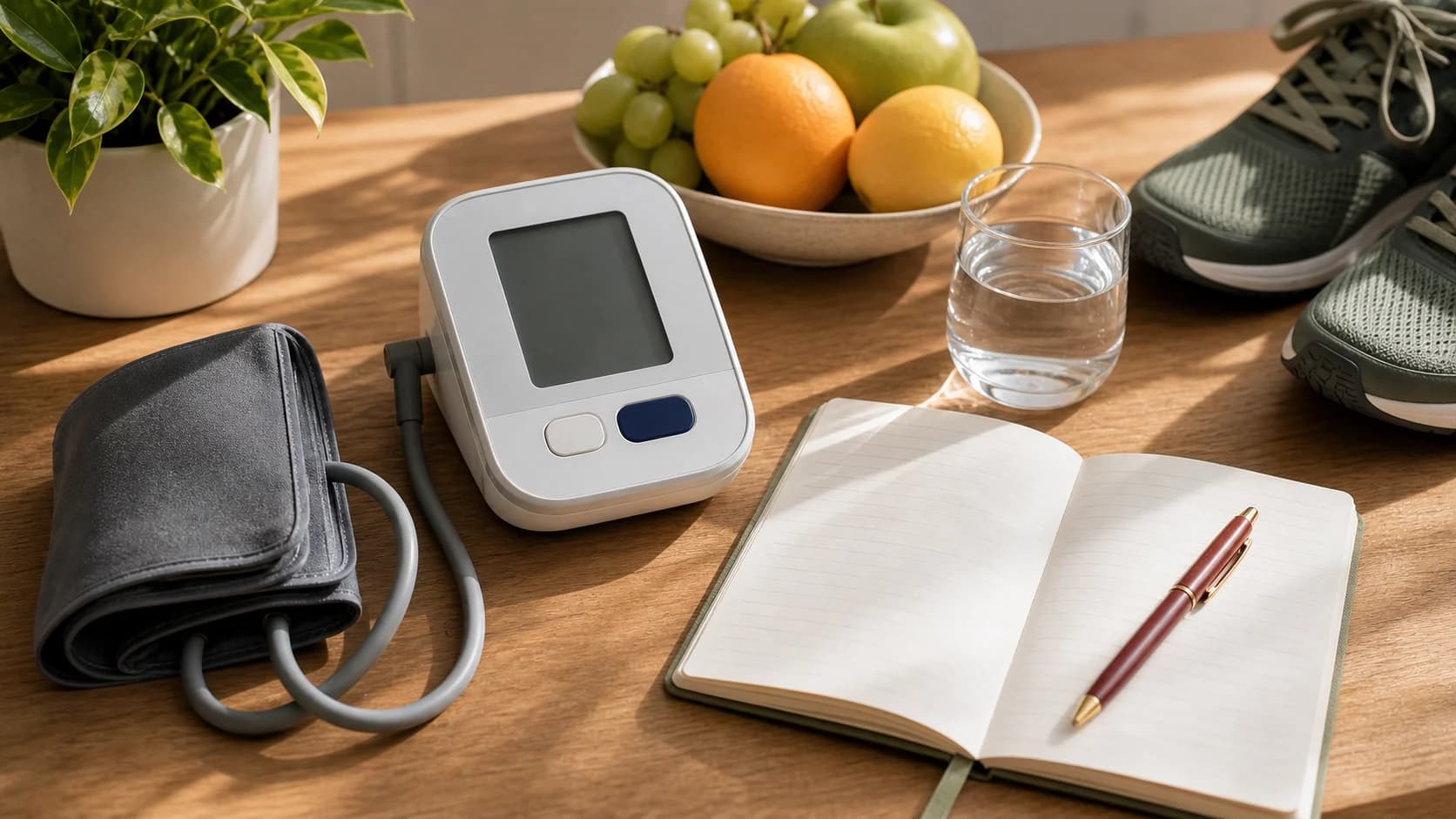
The short answer
Blood pressure is written as two numbers because the heart and blood vessels are doing two different things.
The top number, systolic pressure, reflects pressure when the heart beats. The bottom number, diastolic pressure, reflects pressure when the heart relaxes between beats.
One reading is not your identity. But repeated high readings are not something to ignore.
Systolic vs diastolic, without jargon
Think of blood pressure as pressure inside the arteries.
Systolic pressure is the higher number because it happens when the heart pushes blood out. Diastolic pressure is the lower number because it happens while the heart relaxes between beats.
Both matter. A high top number can matter even when the bottom number looks normal. A high bottom number can also matter, especially in younger adults. The decision about risk should not come from one number alone; it should include age, diabetes, cholesterol, smoking, kidney disease, pregnancy context, medicines, family history, symptoms, and repeated readings.
What the numbers mean
Different countries and clinical groups may use different thresholds. Healthopathy uses the common U.S. public-health framing here because many readers are in the United States.
Blood pressure categories used in U.S. guidance
| Category | Systolic | Diastolic | Practical meaning |
|---|---|---|---|
| Normal | Less than 120 | Less than 80 | Keep the habits that protect this pattern. |
| Elevated | 120 to 129 | Less than 80 | A warning zone. This is a good time to act early. |
| High blood pressure stage 1 | 130 to 139 | 80 to 89 | Discuss personal risk, tracking, lifestyle, and whether treatment is needed. |
| High blood pressure stage 2 | 140 or higher | 90 or higher | Needs medical follow-up and a clearer management plan. |
| Crisis range | Higher than 180 | Higher than 120 | Recheck correctly and seek urgent guidance, especially with symptoms. |
One reading is not enough
Blood pressure changes with stress, caffeine, exercise, pain, sleep, alcohol, nicotine, bladder fullness, conversation, cuff size, arm position, and whether you rested before measuring.
That is why one reading should usually become a pattern check, not panic.
Better home tracking:
- Rest quietly for five minutes.
- Use the right cuff size.
- Keep feet flat and back supported.
- Measure on a bare upper arm at heart level.
- Take more than one reading.
- Record date, time, arm, symptoms, medicines, caffeine, sleep, and stress.
If home readings are repeatedly high, bring the log to a clinician.
Why readings change day to day
Blood pressure is not a fixed score. It moves because the body is alive.
That is why a good log is more useful than a dramatic single reading. A rushed morning, poor sleep, pain flare, stressful call, hard workout, alcohol the night before, nicotine, or a cuff placed over clothing can all shift the number. Repeated readings, measured well, are what make the pattern clearer.
What to bring to a clinician
Bring more than a screenshot.
Useful details:
- Your last 7 to 14 home readings
- Which arm you used
- Cuff size and cuff type
- Medication timing
- Caffeine, nicotine, alcohol, pain, stress, and sleep context
- Chest pain, breathlessness, headaches, dizziness, swelling, vision changes, or neurologic symptoms
- Family history of early heart disease or stroke
This helps a clinician decide whether the pattern is real, whether measurement technique needs correction, and whether lifestyle change, monitoring, medication, or urgent care is appropriate.
When high blood pressure is urgent
Most high blood pressure management happens through planned care.
But symptoms change the situation.
What actually helps blood pressure
Blood pressure is affected by many levers. The important point is not to do everything perfectly. It is to choose the highest-yield next step.
Blood pressure levers that are worth taking seriously
| Claim | Evidence | Practical meaning | Caution |
|---|---|---|---|
| Movement helps | Strong public-health guidance supports regular aerobic activity and strength work for cardiometabolic health. | Walking, cycling, swimming, strength training, and less sitting are useful starting points. | Chest pain, fainting, or severe breathlessness needs medical evaluation. |
| Food pattern matters | DASH-style patterns emphasize fruits, vegetables, low-fat dairy, whole grains, legumes, nuts, and lower sodium. | Add potassium-rich plant foods and reduce sodium-heavy ultra-processed foods where possible. | People with kidney disease or medication restrictions need personal advice. |
| Sleep and alcohol matter | Short sleep, poor sleep, sleep apnea, and alcohol can affect blood pressure patterns. | Track sleep, snoring, alcohol, and morning readings together. | Snoring with breathing pauses deserves care, not just sleep hygiene. |
What not to do
Do not replace blood pressure care with a supplement stack.
Be careful with claims about circulation pills, detoxes, nitric oxide boosters, testosterone boosters, or male enhancement products. Some may be useless. Some may interact with medicines. Some may delay real care.
Use products only after the basics are clear: proper measurement, repeated readings, personal risk, clinician guidance, and a realistic plan.
For the broader prevention map, read the Heart Health hub, Zone 2 Cardio Explained Simply, and The Longevity Plate.